

Back to All Blogs
Back to All Blogs
Are You Part of the Seven Percent?
Monday, Jul 20, 2026
Writing the Missing Chapter in South Carolina’s Criminal History Lifecycle
When a man was charged with killing a 22-year-old North Carolina woman in Columbia, SC, last year, communities started asking questions.
The case highlights an issue in South Carolina: incomplete criminal history records.
With the recent redevelopment of the South Carolina Law Enforcement Division’s (SLED’s) Computerized Criminal History (CCH) repository and several new pilot projects, SLED seeks to fill the gaps in a system that local law enforcement, courts and citizens use every day.
NO PRINTS, BIG PROBLEM 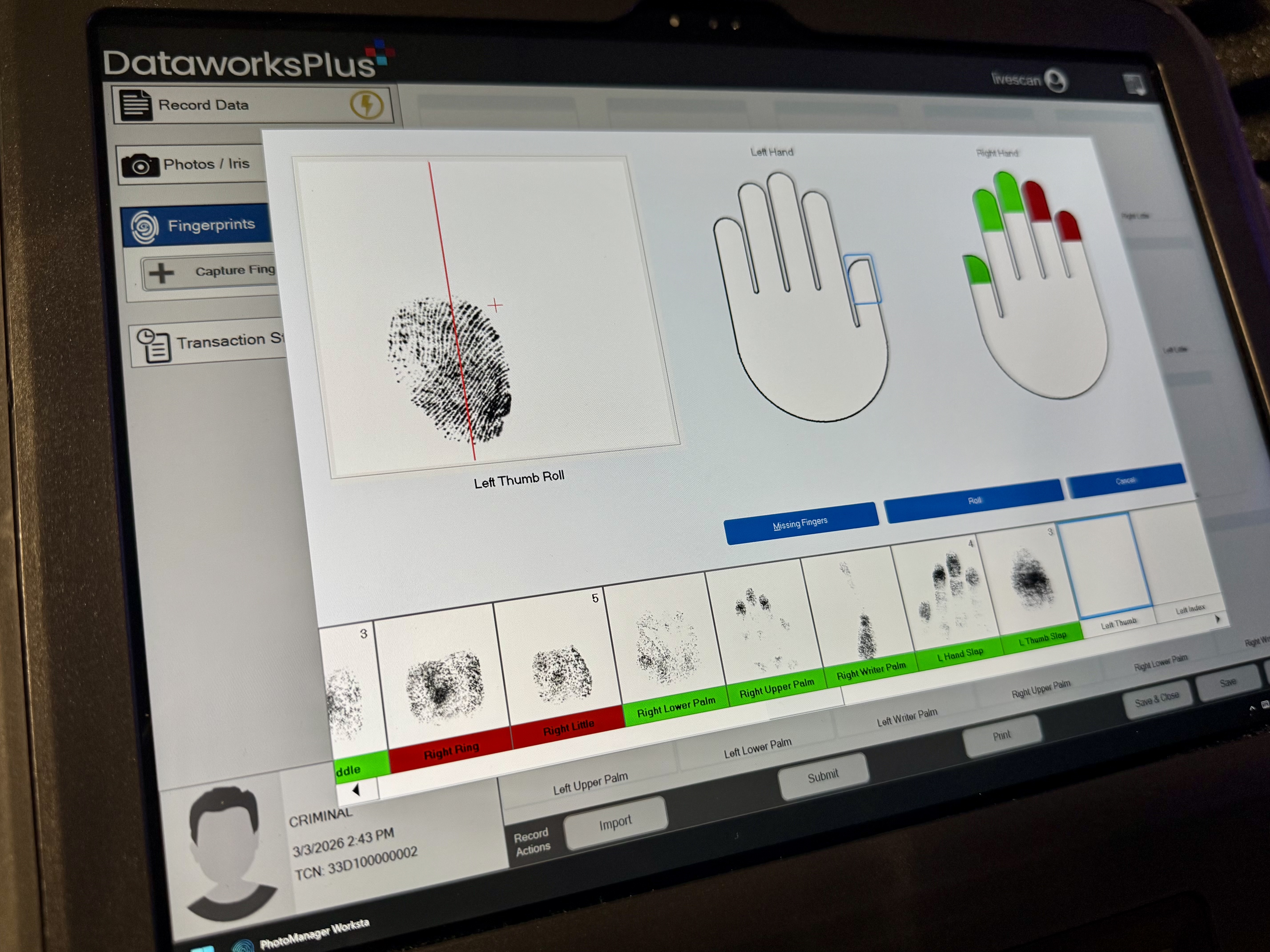
Conversations in SLED’s Criminal Justice Information Services (CJIS) Automated Fingerprint Identification Systems (AFIS) Unit started several years ago.
“Currently, the state is facing a massive obstacle in the fact that we’re not receiving fingerprints for direct indictments through the court system,” said Jacob Brandt, Program Manager in SLED’s AFIS Unit, “We're (SLED) also not receiving a lot of fingerprints in general for arrest charges across the state.”
When a person is charged with a crime in the state of South Carolina, that person must be fingerprinted, and those prints must be submitted. Without those prints, that charge is not included in the person’s criminal history.
When an individual is booked at a detention facility, they must be fingerprinted in order for arrest charges and outcomes of cases to be available on the criminal history. The fingerprints allow criminal charges across all 46 counties in South Carolina to be available to law enforcement, courts and the public.
But if a person’s charges change through a plea deal, or if they are charged in the future with another offense, that person must be re-fingerprinted for their criminal history to be considered current. “So far in 2025 to present day, only 7% of direct indictments actually made it into the criminal history repository,” Brandt said.
This is because the majority of subjects who were direct indicted were not fingerprinted.
A person’s criminal history can include arrest records, the outcome of a case - such as a conviction, an acquittal, or a dismissal - as well as time served in state correctional facilities, if the individual is prohibited from owning or possessing a firearm, or if the individual is on the state sex offender registry.
A criminal history report can serve as a wealth of information…unless there are no fingerprints to go along with a charge a person is facing.
“The biggest misconception is that if you get arrested, you automatically have a criminal history record for that arrest,” said Kelli Ruiz, AFIS Training Coordinator, “But the truth is: if you don’t have fingerprints taken, (or if those prints are not sent to SLED) you don’t have a criminal history.”
As a survivor of domestic violence, Ruiz says work she’s doing now with criminal history training is personal.
“I’ve worked to train hundreds of people across the state on how to properly fingerprint a subject who’s been charged with a crime. It’s so important to put accurate information into the criminal history database,” she said. “SLED as a statewide agency holds the records, but the integrity of the information is only as good as what’s sent to us from our partner agencies,” adding that missing or inaccurate information could end in tragedy.
Ruiz is not the only one on the AFIS team who feels strongly about the issue.
“Prior to coming to SLED, I was a victim advocate, and so I see the other side of it,” said Maria Stephens, Computerized Criminal History Program Supervisor at SLED.
“It’s always said the victims are forgotten about when it comes to the criminal justice system, because everything's focused on the criminal,” said Stephens. “And so, to me, when I see this and everything that we're trying to do, it's kind of bridging that gap. We shouldn't be failing a victim based on paperwork.”
As SLED explored new advances in technology, CJIs produced and shared free training for state detention center employees.
“We're trying to put as many safety nets across the state as we possibly can to get this information. Because if we do not get this information, nobody has this information,” said Brandt. “You have individuals that could possibly be teachers that happen to be arrested for sexually-related charges, and they just have nothing out there. They (the records) are not showing. You could have individuals that should not have firearms because of a prior charge. But we have no convictions to actually deny them firearms. We don't have that information.”
Training for SC detention officers is available from SLED at no cost.
“This is not just one county that's being affected. It is the whole state,” Brandt said, “We’re all a part of that seven percent.”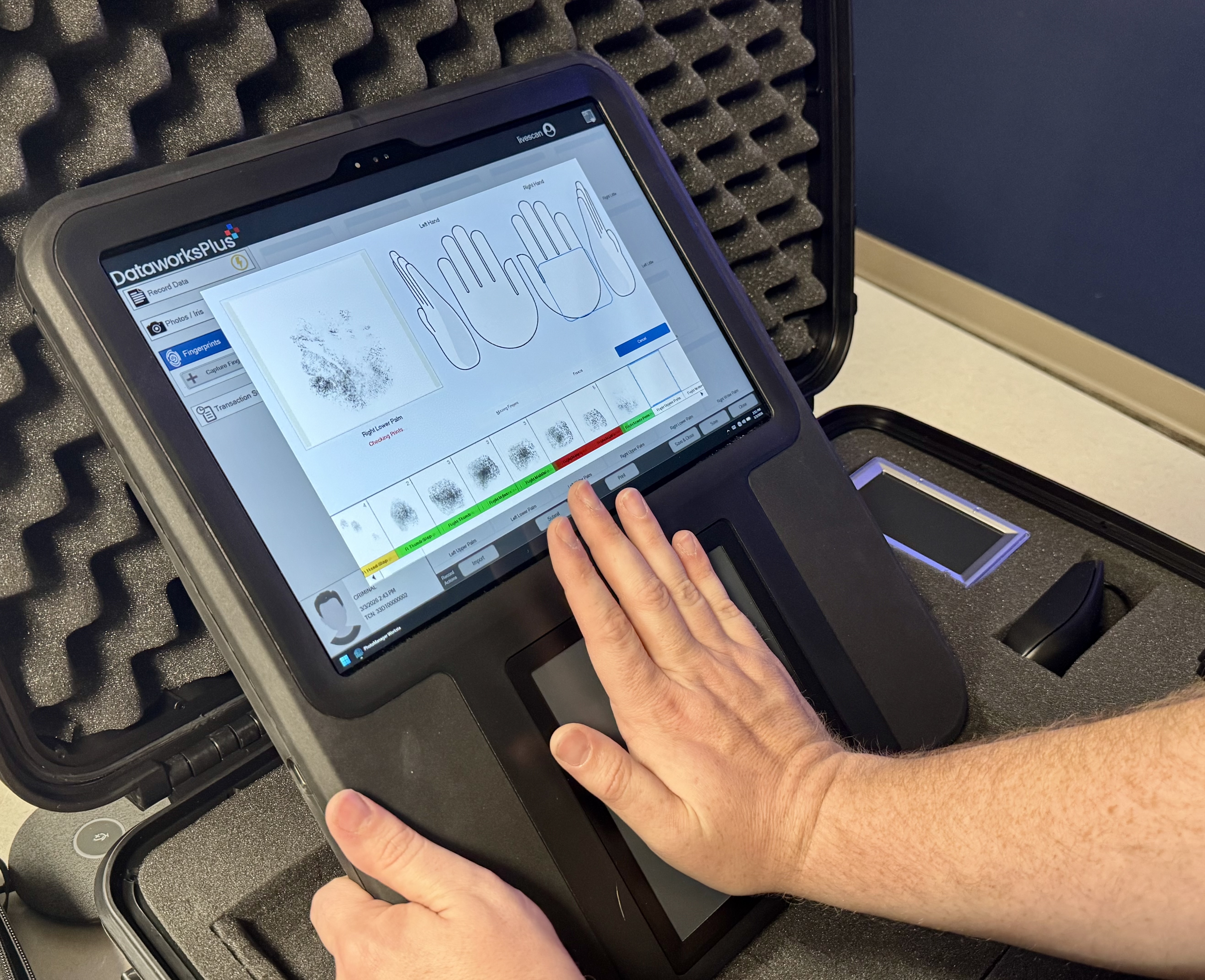
TECH TOOLS TO SOLVE FINGERPRINT FRUSTRATION
New technology allows law enforcement and other state agencies to scan a subject’s fingerprints to pair with that person’s criminal history charges.
SLED recently secured a federal National Criminal History Improvement Program (NCHIP) grant to purchase 5 devices specially designed for portable fingerprint scanning and booking arrest charges.
DataWorks Plus is a law enforcement technology company based in Greenville, SC. The company builds software and physical devices, like fingerprint scanners, used by police departments, correctional facilities, prosecutors and others working in the criminal justice system.
Right now, this is the first known program of this nature in the country.
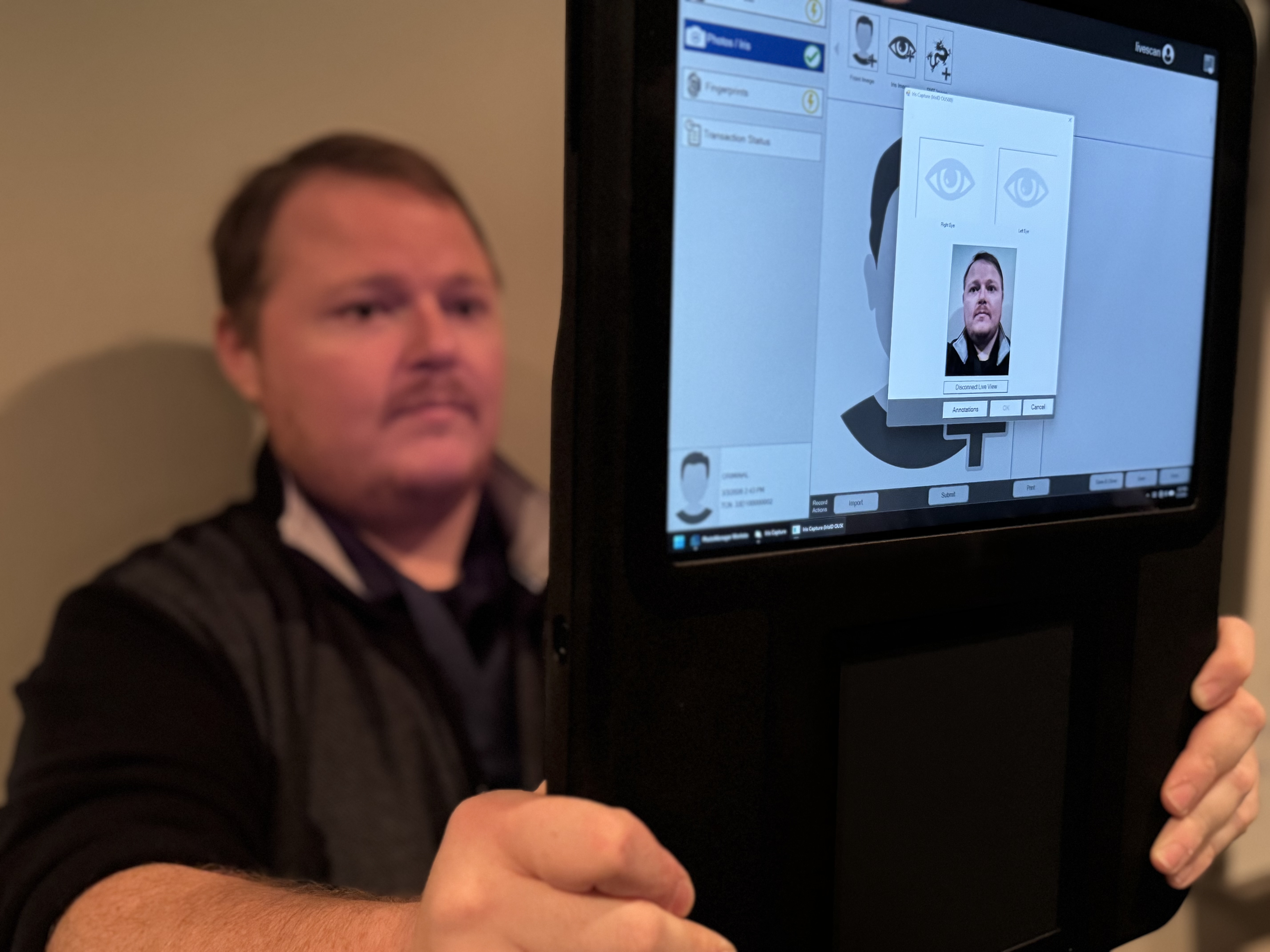
Thanks to continued conversations between SLED CJIS staff and DataWorks Plus, South Carolina agencies now have access to five tablets specially designed to scan fingerprints. The tablets can also take photos and scan an individual’s retina for identification purposes.
SLED owns the devices, which can be loaned at no cost to any state or local agency looking to utilize the technology. CJIS staff travel to any of the state’s 46 counties in order to provide free training on how to use the new machines.
Since the start of the pilot program in 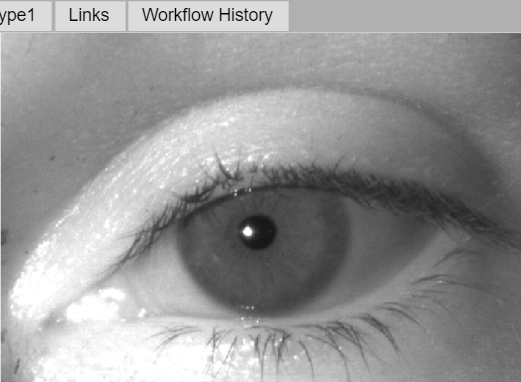 May, SLED has received 15 sets of fingerprints. The offenses of those fingerprinted range from Reckless Driving to Sexual Exploitation of a Minor. That same month, the Florence County Detention Center submitted the state’s first retina iris capture, along with fingerprints, for a charged subject using the DataWorks Plus flat tablet.
“We don't create the facts. We discover and report them,” said Brandt. “This (program) is the epitome of us at SLED as an assisting agency. We are trying our best to help the state be the best it can.”
SEE YOU IN COURT
Now SLED is looking to support solicitor’s offices with the new devices to ensure criminal history information from direct indictments are represented on their criminal history.
Without the fingerprints for these charges being submitted, there will be no criminal record.
“We hope that this pilot program will assist the law enforcement community by providing more information at their fingertips - information provided by these fingerprints that would have otherwise been forgotten," said Brandt.
When an individual enters a plea to dismiss their initial charges, they will at times be directly indicted on similar charges as part of their plea. These ‘direct indictments’ are, more often than not, missing from a person’s criminal history because the person is not re-fingerprinted.
SLED CJIS staff and local solicitors’ offices started fingerprinting direct indictments this year as part of the pilot project to capture missing fingerprints for the criminal history repository.
The criminal history repository is a centralized state agency designated to collect, store, and disseminate official criminal records. SLED serves as South Carolina’s criminal history repository. But the repository is only as current as the criminal history records submitted to SLED by arresting agencies and the courts.
SLED CJIS staff are currently teaching Circuit Solicitor’s Offices in Charleston, Cherokee, Richland, and York counties how to use the new fingerprint scanners. The scanners host software that can instantly book an individual directly from the courthouse, so that subject’s criminal history in South Carolina stays current.
“We want to make it as easy as possible for all of our law enforcement and criminal justice partners and ensure they know exactly who they are dealing with both on the side of the road and in the courthouse,” said Brandt.
 NEW HOPE FOR OLD CASES
The program is also now supporting county coroners in Florence, Laurens, Charleston, Richland, York, Cherokee, Oconee, Newberry, Beaufort, Sumter, and Greenville Counties. Ten new devices from DataWorks Plus and IDEMIA, a security technology firm, can electronically capture the fingerprints of an unknown deceased individual.
The portion of coroner the pilot project means a county coroner in South Carolina can identify a deceased subject and share this information with other local law enforcement agencies across the state and throughout the country.
Through coroners submitting fingerprints of the deceased, the technology could help close cold cases, effectively allowing other state and federal agencies to close pending investigations involving deceased individuals.
“(We just had) the first case in recent memory that the state of South Carolina has deceased an individual’s criminal history at the state and federal level,” said Seraphim Haftoglou, AFIS Supervisor.
Deceasing a person’s criminal history indicates that the individual is dead.
“He was transient, a veteran, had a criminal history in other states,” Haftoglou said. “Now those files can all be closed out and we can help literally put him to rest.”
CONTACT: CJIS Program Coordinator Jacob Brandt jbrandt@sled.sc.gov (803) 730-0210