

Back to All Blogs
 Back to All Blogs
SLED Shares a Behind-The-Scenes Look at K9 Training
Thursday, Feb 26, 2026

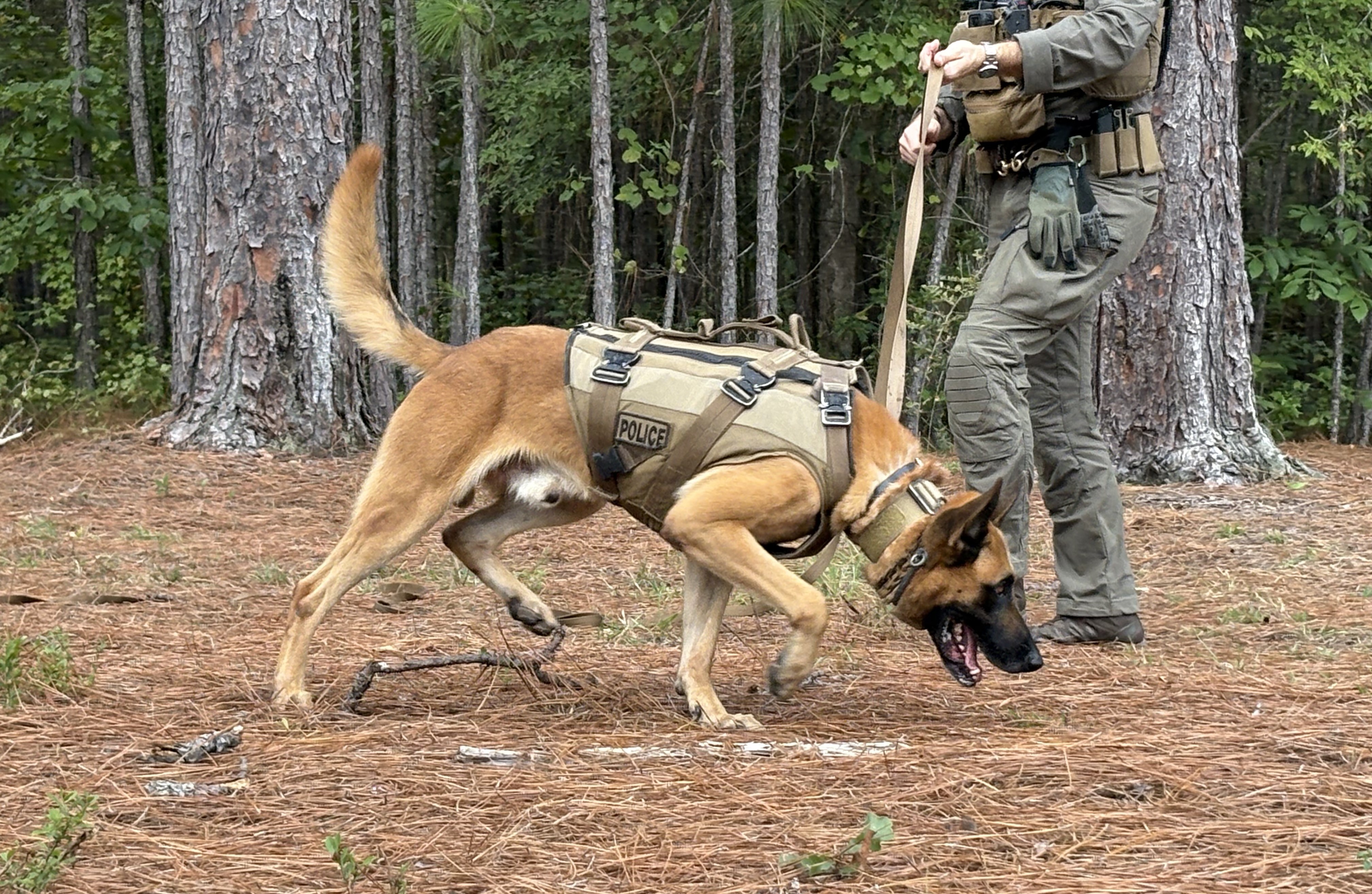
February is Dog Training Education Month, and SLED is constantly training the K9’s assigned to the Bomb Squad, Narcotics Unit, SWAT Team, and Arson Unit, along with the agency’s new Human Remains Detection K9.
SLED Chief Mark Keel saw the need for in-house K9 training and hired SLED’s K9 Coordinator, Senior Special Agent Douglas Wannemacher, in 2024 to oversee the division’s K9 training, now known as SLED’s K9 Academy. The Academy trains utility/patrol dogs and tracking dogs, along with dogs that detect narcotics, human remains, explosives, and ignitable liquids.
Wannemacher created the Academy curriculum and training strategy so that SLED K9’s and their handlers can continue to assist law enforcement agencies across South Carolina.
The SLED K9 Academy is structured to work with SLED K9 handlers over a period of 12-21 weeks and provides rigorous training and certification programs. Since the program was launched, the Academy has conducted 294 training sessions with SLED K9 teams, ensuring operational readiness and skill enhancement. Wannemacher also trained with 454 other K9 teams across multiple law enforcement agencies statewide.
As part of the training, dogs are given a target odor that is matched with its K9 discipline, depending on the dog’s assigned unit. A SLED K9 can be trained to detect narcotics, human remains, explosives, or ignitable liquids. The dog is given a command to find the target odor and after locating that odor, the K9 will stay focused and obedient to that odor until its handler gives the “release” command. According to Wannemacher, “Obedience is the foundation of ALL K9 training.”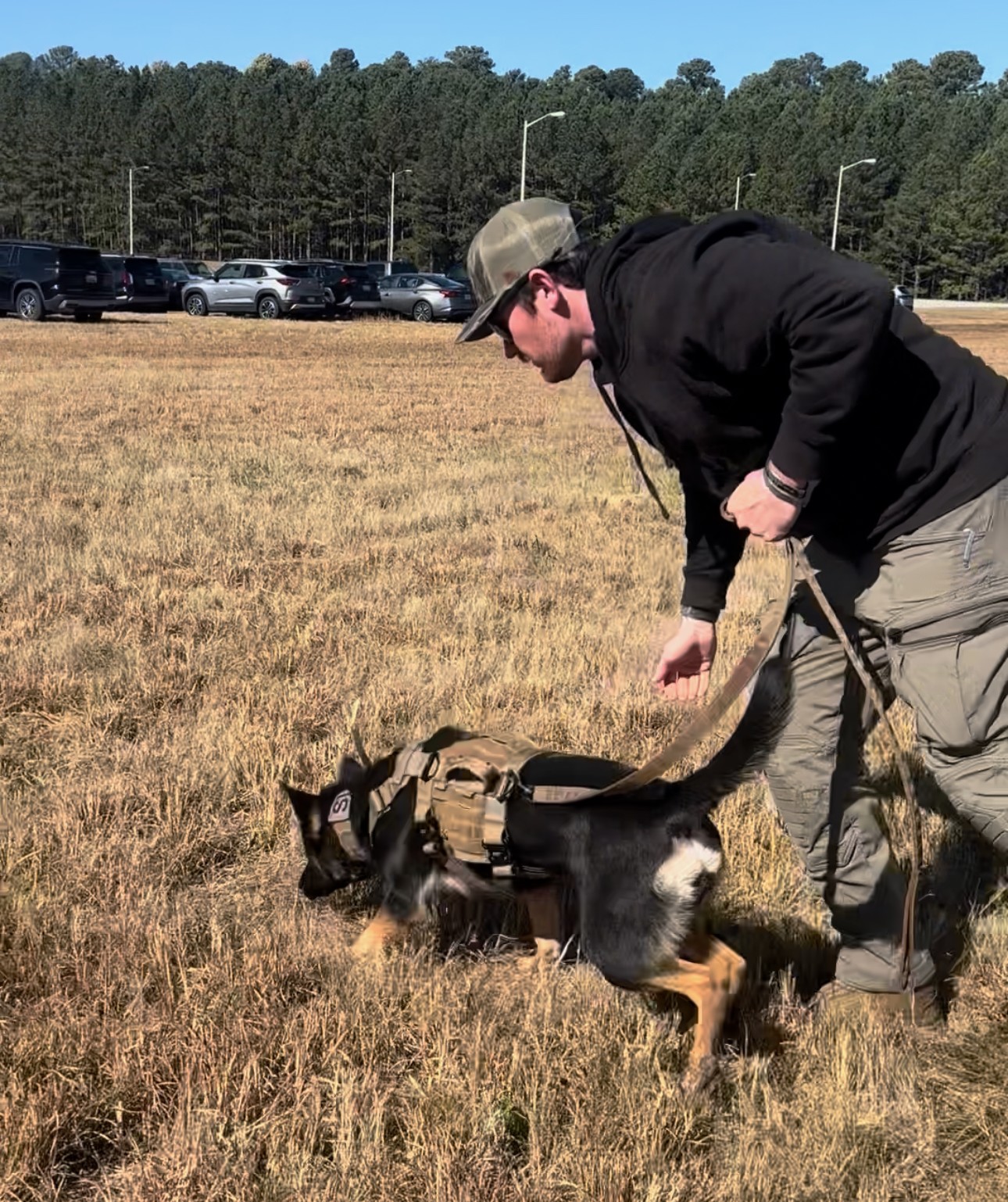
“Dogs, for the most part, are creatures of habit and will pick up on the handler’s body language and voice tone,” said Wannemacher. “The tone of the handler’s voice tells the dog what is expected from them, whether that is to ‘search’, ‘come here’, or ‘sit down’.”
Senior Special Agent Wannemacher stressed that it is critical that the handler focuses on the five tones that dogs are familiar with:
1) Command - create an association between a word and the dog’s action, such as to “search”, “down”, and “here”
2) Correction - when the dog is not performing well
3) Praise - give approval to mark behavior associated with the dog doing well
4) Permissive - the task is done, and the reward is coming
5) Agitation - gets the dog aware of their surroundings
The team works closely to ensure the K9 is confident in the handler’s ability to “speak their language” by using these five tones. The tones also aid in developing a bond between the handler and
“Everything we do with a dog is innately a system of condition and response,” Wannemacher added.
Law enforcement agencies in South Carolina that do not have specialized training available on-site can reach out to SLED for K9 team training at no cost by emailing K9Training@sled.sc.gov.