

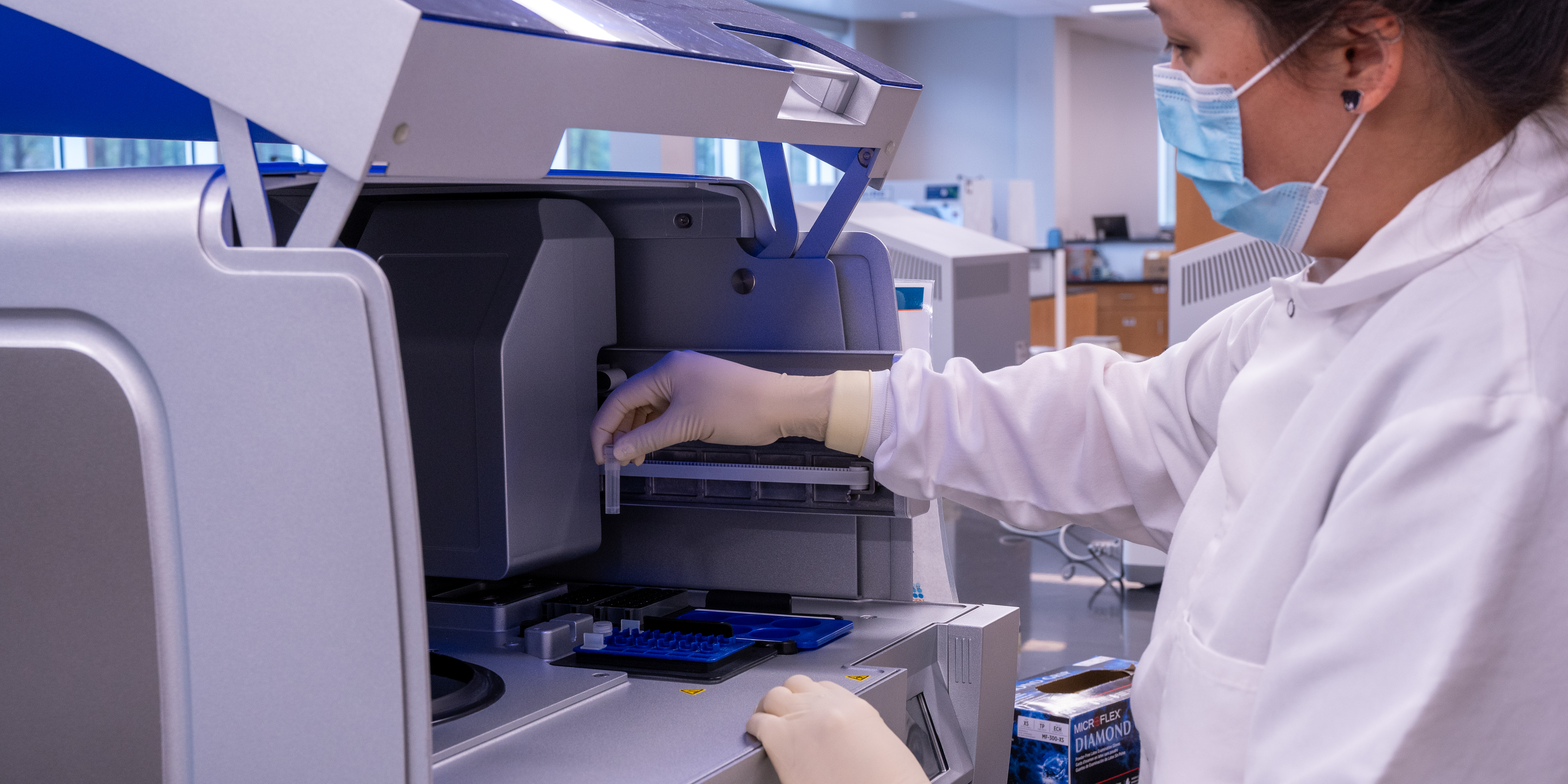
The DNA Casework Department performs scientific analyses on biological evidence such as blood, semen, and saliva. Technicians and analysts evaluate available information to understand the nature of the case and what questions need to be addressed. They then examine submitted evidence items to locate and identify probative biological samples.
The DNA Casework Department is comprised of two sections (Serology and DNA Analysis) that perform the following functions related to the analysis of biological evidence:
- Evidence Processing – Typically performed by the serology technicians and consists of examination of items of evidence for the potential presence of biological stains (such as blood, semen, and saliva), hairs, or ownership/touch DNA. If potential evidence is identified, it is carefully collected and forwarded to the appropriate department or section for further analysis.
- Serology – Most often performed by serology technicians and consists of testing to indicate or identify the presence of body fluids (blood, semen, and saliva).
- DNA Analysis – Performed by DNA analysts on samples forwarded from and prepared by serology technicians, other SLED Forensic Laboratory departments or samples submitted from outside law enforcement agencies that do not require processing.
DNA analysis is performed on evidentiary samples and known DNA standards using Short Tandem Repeat Polymerase Chain Reaction (STR-PCR) DNA technology. The DNA profile developed from the sample(s) is compared to DNA profiles developed from individuals involved in the case to determine inclusion or exclusion of the person identified as a possible source of the profile in question. Statistical analysis provides weight or meaning to positive associations.
Y-STR analysis is also available at SLED. Y-STRs are DNA markers found on the Y chromosome. They are paternally inherited meaning that paternal male relatives will have the same Y-STR profile. Y-STRs are useful in cases where there is a high presence of female DNA which could potentially mask the male DNA, such as sexual assaults.
The DNA Casework Department utilizes a “Direct-to-DNA” approach, primarily in sexual assault cases, to preserve sample and maximize the chances of obtaining profiles suitable for comparison and entry into the Combined DNA Index System (CODIS). With appropriate justification and adequate evidentiary sample, routine serological body fluid identification is still available upon written request.
When necessary in criminal cases, the DNA Casework Department can assist in arranging for private laboratories to perform DNA testing not performed at SLED such as mitochondrial DNA testing or Genealogy testing. The cost of testing performed by a private laboratory is generally the responsibility of the requesting agency.
Due to high demand for DNA analysis and in an effort to reduce the number of cases awaiting analysis, the SLED Forensic Services Laboratory, through the DNA Casework Department, may outsource analysis of some DNA cases to private vendor laboratories.
Vendor laboratories utilized for outsourcing must be accredited and must process casework samples in accordance with the FBI Quality Assurance Standards for Forensic DNA Testing Laboratories. These are the same standards that govern DNA analysis at SLED. Analytical data and final reports are reviewed by DNA analysts at SLED and qualifying DNA profiles are entered into the Combined DNA Index System (CODIS). Once the review process is complete, these reports are available via iLAB. Reports will be mailed if the submitting agency does not have access to iLAB.
SLED Sexual Assault Evidence Collection Kit Forms and Information
The DNA Casework Department provides Sexual Assault Evidence Collection Kits and Suspect Evidence Collection Kits to medical facilities throughout South Carolina to aid in standardizing collection of sexual assault evidence. All kits were developed in conjunction with medical, legal, and law enforcement communities.
Sexual assault evidence collection protocols, instructions, and other forms and information are available for download in the list of links below. A copy of the SANE protocol must be provided to law enforcement with the sexual assault kit.
SLED Subject Evidence Collection Kits are only for the collection of evidence from an individual who is suspected of committing a sexual offense. The instructions and protocol for this type of kit are included in the list of links below.
It is strongly recommended that each facility print a master copy of each form, so that in the event that internet access or this site is not available when needed, evidence collection is not delayed.
Sexual assault kits collected during a forensic examination must be entered into the S.C Sexual Assault Kit Tracking System (Track-Kit). Participation by medical facilities, law enforcement agencies, and local DNA laboratories is mandated by South Carolina Act 134 H. 3309.
If you have any questions or concerns regarding the forms below, please contact the SLED Forensic DNA Casework Department at 803-896-7383 Monday through Friday 08:30am to 05:00pm. If necessary, we can be reached at 803-737-9000 during non-business hours.
- SLED Sexual Assault Examination Protocol- Box-Style
- SLED Sexual Assault Evidence Collection Kit Instructions - Box-Style
- SLED Sexual Assault Examination Protocol - Envelope-Style
- SLED Sexual Assault Evidence Collection Kit Instructions - Envelope-Style
- Sexual Assault Evidence Collection Kit Instructions with Photos
- DCVC SAP Billing Claim Form
- DCVC SAP Medical Release Protocol Form
- Notice of Change - SOVA to DCVC
- Subject Evidence Collection Kit Instructions
- Subject Evidence Collection Kit Protocol
- SCCADVASA SA Member Program List